
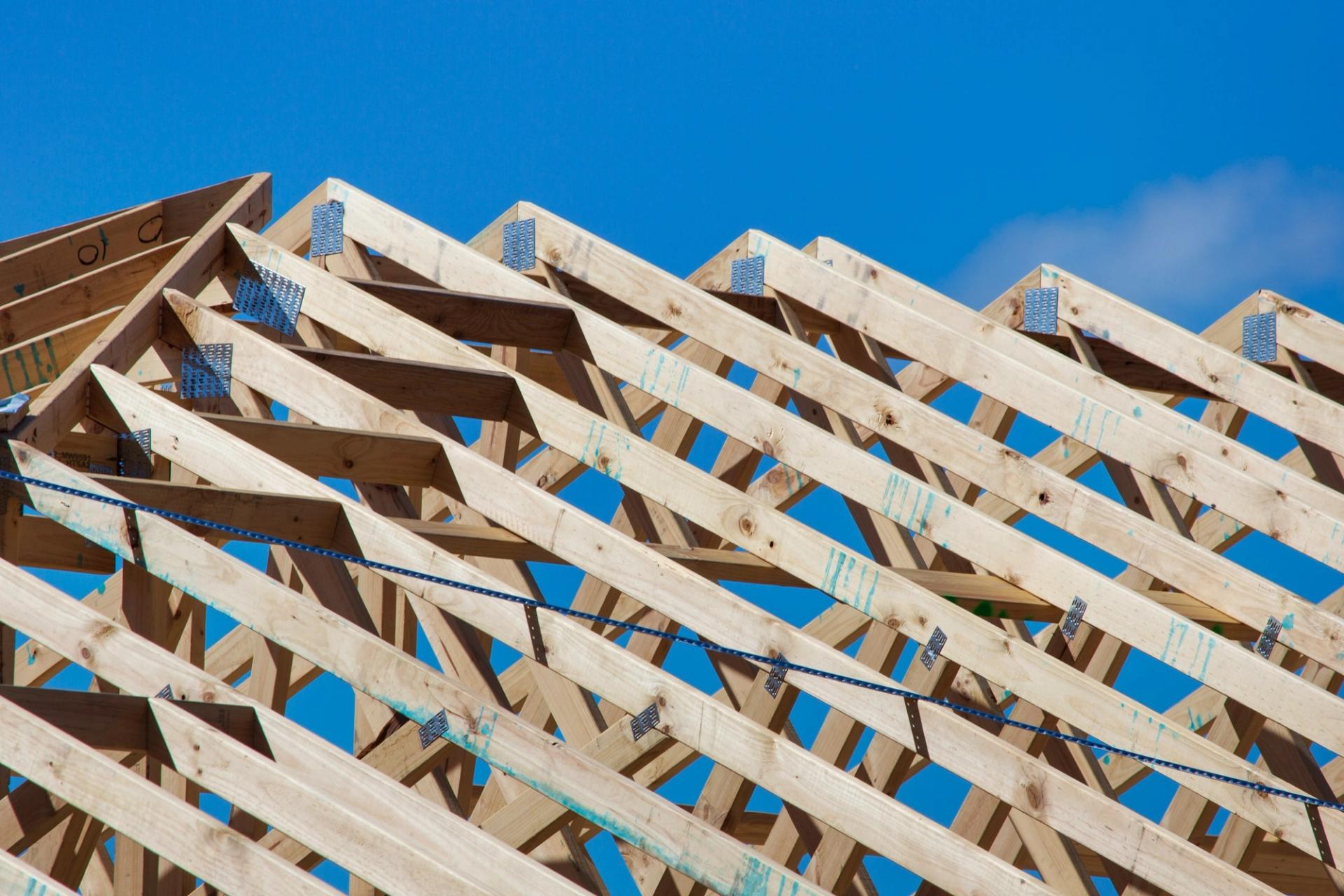
Construction
Build the home you've been picturing with a one-time close construction loan. Lot, construction period, and permanent mortgage all roll into a single loan with one closing — so you don't requalify, re-lock, or re-pay closing costs when the build wraps. Construction lending is our specialty. We close these every week, manage the draws ourselves, and ride your build from groundbreaking to keys.
Key Benefits
- One-time close — land, build, and permanent loan in a single loan with one closing
- VA OTC ($0 down for Veterans) and FHA OTC + down payment assistance (build with little to no money down)
- No requalifying or re-locking after construction — you're done at the start
- Automatic float-down at conversion — no request needed, no market-movement benchmark
- Many programs require little or no payment during the construction period
- Single set of closing costs (vs paying twice with a separate construction + permanent loan)
- Site-built (including barndominium), modular, and manufactured homes (single- and multi-wide) eligible
- We register builders, manage draws, and ride the build with you and your contractor
Who It's For
Anyone building a new primary home, whether you've already got land, you're buying it as part of the build, or you're tearing down an existing structure to build new. Site-built, modular, barndominium, and (on many programs) multi-wide manufactured homes all qualify. If you've got a vision, a buildable lot, and a builder, the OTC handles the rest.
One-time close vs two-loan construction — why this is better
Traditional construction financing comes in two pieces: a short-term construction loan (usually 12 months, interest-only, balloon at the end), followed by a separate permanent mortgage you have to qualify for AGAIN once construction completes. That's two underwriting cycles, two appraisals, two rate locks, two closings, and two sets of closing costs. If your credit or income changes during the build, your permanent loan can fall through and you're scrambling.
One-time close (OTC) collapses all of that into a single loan. We underwrite once at the start to both the construction period and the permanent payment. You close once, lock once, pay closing costs once. When construction completes, the loan automatically converts to your permanent mortgage — no requalifying, no rate uncertainty, no second closing.
What you save with OTC: roughly one full set of closing costs ($4–10K typical), one rate-lock fee, the risk of rate moves during the build, and the risk that your file weakens between construction and permanent. The OTC structure is materially better — the only reason it isn't the default is that fewer lenders are set up to handle it properly.
Four ways to build with us
We offer one-time close construction across four loan types, so the right fit depends on who you are and how much you want to put down. Two of them are products almost no other lender offers.
- VA One-Time Close — $0 down. Our signature. For Veterans, service members, and eligible surviving spouses: build with $0 down on full entitlement, no monthly mortgage insurance, and no payments during construction. Very few lenders do VA construction; it's the heart of what we do. → See the VA Construction page.
- FHA One-Time Close — from 3.5% down (DPA optional). Build with FHA's flexible credit and as little as 3.5% down. And rare among lenders: we can pair it with down payment assistance that covers your 3.5%, so building with little to no money out of pocket is on the table. → See the FHA Construction page.
- Conventional One-Time Close — as low as 5% down. For stronger-credit borrowers: build with as little as 5% down, competitive terms, higher loan amounts, and the option to drop mortgage insurance as you build equity. A great fit when FHA or VA isn't the path.
- USDA One-Time Close — $0 down, rural. For eligible buyers building in USDA-designated rural areas: $0 down, income limits apply. If your lot qualifies, this is one of the few other true no-down-payment ways to build. Check the property and income eligibility with us.
Not sure which fits? That's the conversation — tell us your situation and we'll point you to the right one (and tell you straight if another lender or loan is the better move).
The 12 steps from idea to keys
Building a home is a multi-quarter project with a lot of moving parts. Most of it is manageable if you follow a predictable sequence. We push the first three steps hard because the order matters more than most borrowers realize:
The critical three — do these in this exact order
- 1) Get pre-approved (BEFORE you do anything else). Without a real pre-approval, you're designing a home in a vacuum. Eyes-bigger-than-appetite is the #1 reason builds stall. A real pre-approval — credit pulled, income verified, AUS-approved — tells you what loan amount actually works for your scenario, on which programs.
- 2) Find your builder (BEFORE land). Your builder has more impact on the experience than we do. Pick someone you trust, with the track record and capacity for your scope. Get referrals from previous clients. Visit a completed build. Ask the awkward questions — what's their default markup, how do they handle change orders, what's their warranty. Don't shop on price.
- 3) THEN find land. Land is the exciting step and everyone wants to jump there first. The mistake: site conditions (slope, drainage, soil, utility access) hugely affect construction cost. Your builder needs to be involved in land choice — what looks like a great lot might add $40K of site prep that wrecks your budget. Find builder first, then look at land together.
Steps 4–12 — the rest of the build
- 4) Preliminary design + home pricing. Work with your builder to scope the home and align it with your budget. This isn't your final design (modifications happen once you've got land), but it establishes the financial frame.
- 5) Submit offer on land + contract negotiation. Negotiate an option/feasibility period long enough to get your final plans and specs together — typically 60–90 days, longer if you can.
- 6) Submit the land + construction contract to us. We update your loan disclosures with real numbers. You'll review them with your loan officer.
- 7) Order appraisal + title. An appraiser uses your plans, specs, and the land to determine the "as-built" value — what the finished home will appraise for. We cannot lend over that value, so this step is critical.
- 8) Closing + funding. You sign at the title company. Funds move from the lender to the title company over a few days (this is the "funding" step). Once funded, your builder can start.
- 9) Begin construction. Your builder submits draw requests as work progresses; we review the work in place against the cost breakdown and release funds by percentage of completion. Contingency reserves are not required on our OTC programs, but we strongly recommend planning for one (typically 10–20% of the build) since most projects discover something.
- 10) Construction completion. Final inspection. Certificate of occupancy. Your builder is paid in full. You get keys.
- 11) Conversion to permanent. On a true OTC, this happens automatically — no new closing, no requalification. Your construction-period loan becomes your permanent mortgage and you start your regular monthly payments.
- 12) Tell us how we did. Reviews matter. If we did right by you, telling other Veterans, builders, and friends is how we keep doing this work.
Builder registration — what we collect
Every lender that does construction lending — us included — has a builder registration process. Builders aren't registered with HUD or any agency for construction loans; each lender registers builders on a case-by-case basis. Registration lets us confirm your builder has the financial capacity, experience, and insurance to complete your build on budget and on schedule.
Here's what we collect during builder registration. Your builder provides this directly to us — it doesn't slow your timeline:
- Company information — entity type, ownership, years in business, license number
- Project history — completed builds, current projects, references from previous clients
- Trade references — vendor / supplier credit references and pay history
- Credit references — bank line, current lender relationships
- Licensing — state contractor license (where required), local permits
- Insurance — General Liability and (where applicable) Workers' Compensation
- Financial statements — primarily on site-built scopes; we look at builder capacity for the size of build
If you've got a builder you love but they've never done a construction loan through a lender, that's fine — we walk them through the registration. Once we have the full packet, the review itself typically takes just a few business days. We'll flag anything that needs adjusting early so the file keeps moving.
Land scenarios — buying, owned, or tearing down
Construction loans handle three land situations cleanly:
- Buying land + building (most common): The land purchase is rolled into the construction loan. You close on land + construction in one transaction; no separate lot loan first.
- Already own land (free and clear or with a small lot loan): Equity in the land counts as down payment. If you bought the lot a year ago for $80K and it now appraises for $120K, your equity contributes to the LTV calc on the construction loan.
- Tear-down + rebuild: Demolition cost and disposal of old materials are factored into the construction budget. The "as-built" appraisal values the new home, not the structure being torn down.
Construction draws — how money flows during the build
Construction funds don't sit in an escrow or interest-bearing account at closing — they're funded from the lender as draws are released. As the build progresses, your builder submits a draw request against the project's cost breakdown — the line-item budget covering everything from foundation and framing to mechanicals, drywall, and finishes.
Each draw is based on percentage of completion. We review the work in place and go through the cost breakdown line by line, marking how far along each item is, and release funds for the portion that's actually complete. Our default is 5 draws on site-built homes and 3 on modular or manufactured — we can add more if your build calls for it. You sign off on each draw release.
Contingency: Not required on our OTC programs — but highly recommended. A 10–20% contingency on the construction budget gives you a buffer for the inevitable surprises (hidden site conditions, change orders, material price spikes). Unused contingency reduces your loan balance at completion, so you don't pay for what you didn't use.
Conversion to permanent — what happens at completion
When construction is complete (certificate of occupancy issued, builder paid in full, all inspections passed), the construction-period loan automatically converts to your permanent mortgage. No new closing. No new credit pull. No new rate lock.
Automatic float-down at conversion. Rates often move during a 6–12 month build. At conversion, we automatically float your rate down to current market — no request required, no market-movement benchmark to hit. It's just part of our standard process. You finish the build at today's rate, not 12 months ago's.
Your permanent mortgage uses the term and structure you selected at the original closing. You start making regular principal-and-interest payments. The lien on your home is now a standard mortgage, refinanceable down the road if rates drop further.
Eligible home types
- Site-built homes (including barndominiums) on a permanent foundation
- Modular homes (factory-built sections assembled on permanent foundation)
- Manufactured homes on permanent foundation — single-wide and multi-wide both eligible (varies by program)
- Primary residence (most programs) and second home (select programs)
The Construction Process
- 1
Get pre-approved
This is step one — before you go look at land or hire an architect, get pre-approved so you know what you actually qualify for. People skip this and design a home they can't afford. Don't be that person.
- 2
Find your builder
Step two — interview builders, get referrals, ask hard questions. Your builder has more impact on the experience than we do. Pick well.
- 3
Then find your land
Step three — yes, land is exciting. But picking land before you have a builder is how projects go sideways. Land choice affects the build cost; your builder needs to be involved.
- 4
One-time close
Plans + builder contract + land + your pre-approval come together. We close once before construction begins — no second closing later.
- 5
Build & move in
As work progresses, your builder submits draw requests; we review the work in place against the cost breakdown and release funds by percentage of completion. When the home is done, the loan auto-converts to your permanent mortgage — and we automatically float your rate down to current market. Keys to your home.
Frequently Asked Questions
What is a one-time close construction loan?
A single loan covering land, construction, and permanent financing — closed once before construction begins. When construction completes, it automatically converts to your permanent mortgage without a second closing, new credit pull, or rate lock. Compared to traditional two-loan construction (where you take a short-term construction loan then refinance into a permanent), OTC saves you closing costs, eliminates rate-move risk during the build, and removes requalification risk.
Why do you push pre-approval, builder, then land in that exact order?
Pre-approval first so you know what you actually qualify for and — just as important — what you're comfortable with month-to-month. Builder second because once you know your budget, you sit down with the builder and figure out whether that budget can deliver the home you have in mind. If it can't, you either adjust expectations or adjust the budget — building gets expensive fast, and that conversation needs to happen before you fall in love with a lot. Land last because the builder should help guide that decision: sometimes paying a little more for a better-prepared lot saves tens of thousands in lot prep and dirt work — the unsexy part of the build that wrecks budgets when nobody plans for it.
How do you 'register' my builder? Aren't builders registered with VA or HUD?
Builders are NOT registered with VA, HUD, USDA, or any agency for construction loans — that's a common misconception. Each lender (us included) registers builders through its own process. We collect: company info, project history and references, trade and credit references, license, insurance (general liability plus workers' comp where applicable), and financial statements (primarily on larger site-built scopes). Once we have the full packet, the review itself typically takes just a few business days. If you've got a builder you love who's never done a lender-registered construction loan, we walk them through it.
Can I act as my own builder/general contractor?
No. Construction loans require a licensed, insured, registered general contractor. Even if you're a licensed contractor yourself, you can't be the GC of record on your own construction loan. Reason: the lender, the warranty/insurance carriers, and (for VA/USDA) the underlying agency all need an arm's-length, accountable builder for lien-priority, completion-guarantee, and warranty purposes.
How long does construction take?
Most single-family site-built homes go 6–9 months from groundbreaking to certificate of occupancy. Larger or more custom homes can take 12+ months. Modular builds are faster (the home is built in factory, then assembled on site). Weather, supply chain, and change orders are the main timeline variables. We structure your loan with a construction-period long enough to cover the realistic build; we can extend if needed for cause.
Do I make payments during construction?
Depends on the program. Many of our OTC programs require no payment during the construction period — the construction-period interest is rolled into the loan. Others require interest-only payments on the funds drawn. We'll tell you upfront what to expect. On a VA OTC, no construction-period payments is the standard structure.
What if construction goes over budget?
This is exactly why we require a fixed-price turnkey contract from your builder before closing. The builder is contractually on the hook to deliver the home at the price stated in the contract — they absorb cost increases on their scope, not you. The two things that can still move the budget are change orders you request mid-build (you'd fund those out of pocket or out of contingency) and true surprises outside the builder's control. That's why we strongly recommend planning for a 10–20% contingency reserve even though we don't require it.
Can I buy land with the construction loan, or do I need to own it first?
Both work. You can buy the land as part of the construction loan (most common — single transaction, one closing). Or you can already own the land and use the equity as down payment toward the construction loan. We've also done tear-down/rebuilds where the land has an existing structure that gets demolished and replaced.
What home types qualify?
Site-built homes (including barndominiums), modular homes on permanent foundation, and manufactured homes on permanent foundation — both single-wide and multi-wide are eligible (varies by program). Tiny homes typically don't qualify because they don't meet the program's permanent-foundation and minimum-square-footage rules.
Do you require a contingency reserve?
Not on our OTC programs — but we strongly recommend planning for one. A 10–20% contingency on the construction budget gives you a buffer for the inevitable surprises (hidden site conditions, change orders, material price spikes). Unused contingency reduces your loan balance at completion, so you don't pay for what you didn't use.
How are construction draws paid out?
Funds do not sit in an escrow or interest-bearing account at closing — they're released as draws from the lender as the build progresses. Draws are based on percentage of completion: your builder submits a request against the project's cost breakdown, and we review the work in place and go through that breakdown line by line, marking how far along each item is and releasing funds for the portion that's complete. You sign off on each draw release. Our default is 5 draws on site-built and 3 on modular or manufactured — we can add more if your build calls for it.
What happens when construction is done?
Final inspection, certificate of occupancy, final builder payment, and you get keys. On a true OTC, your loan automatically converts to your permanent mortgage at that point — no new closing, no new credit check, no new rate lock. As part of our standard process, we also automatically float your rate down to current market at conversion — no request required, no market-movement benchmark — so you finish the build at today's rate, not 12 months ago's. You start making your regular monthly payments and you're now a regular homeowner with a regular mortgage.
Why do so few lenders do construction loans well?
Construction lending is operationally complex. Builder registration, draw inspections, contingency management, the as-built appraisal, and the conversion mechanics all require specialized infrastructure that most lenders don't have. Most lenders refer construction out, or do it badly. We've built our team around it — it's what we close every week.
Related Programs
Ready to get started?
Let's talk through your options. No pressure, no obligation — just straight answers from a team that does this every day.

